
IGCSE Maths Topics Where Students Often Lose Marks (0580): What Examiners Reported

Last reviewed: November 2026 Quick answer: The IGCSE Maths topics where students often lose marks on the 0580 Extended papers, according to Cambridge’s examiner reports for June 2024 and June 2025, are: vectors, set notation and Venn diagrams, indices with negative or fractional powers, graphs of functions (asymptotes and solving equations with a drawn line), Read the full article
How to Use IGCSE Maths Past Papers: A Method That Raises Marks

Last reviewed: November 2026 Quick answer: Here is how to use IGCSE Maths past papers well: match them to your child’s board, tier and syllabus first, then work in three stages: topic sets from older papers, timed sections, and finally full papers in exam-length pairs. Mark every attempt with the official mark scheme, record where Read the full article
Cambridge O Level Maths 4024: Papers and How to Prepare
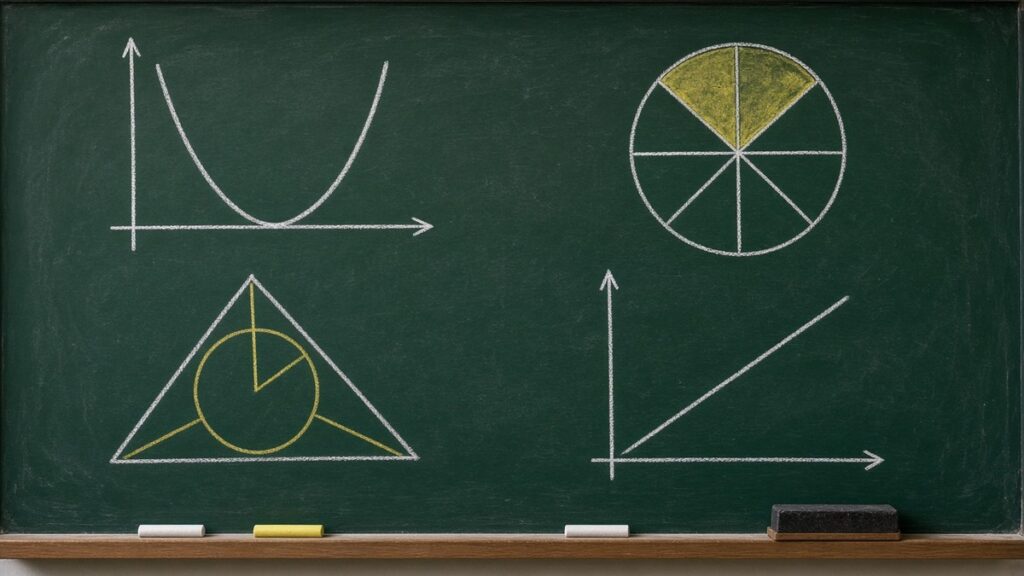
Last reviewed: November 2026 Quick answer: Cambridge O Level Maths 4024 has two papers, and every student sits both. Paper 1 is non-calculator and Paper 2 needs a scientific calculator. Each lasts 2 hours, is worth 100 marks and counts for 50%. More than half the marks on each paper (50 to 60%) test analysing, Read the full article
IGCSE Maths 0580 Syllabus 2028-2030: What Changed
Last reviewed: November 2026 Quick answer: Very little has changed in the 0580 syllabus for 2028 to 2030. Cambridge’s own change list says there are “no significant changes which affect teaching”. We compared the 2025–2027 and 2028–2030 syllabus documents line by line. The topics, papers, marks, timings, calculator rules and formula lists match. The differences Read the full article
Edexcel IGCSE Maths 4MA1: Foundation vs Higher Tier

Last reviewed: November 2026 Quick answer: In Pearson Edexcel International GCSE Maths (4MA1), Foundation tier (Papers 1F and 2F) leads to grades 5 to 1, and Higher tier (Papers 1H and 2H) leads to grades 9 to 4, with grade 3 allowed. Below grade 3 on Higher, the result is U. Both tiers have two Read the full article
IGCSE Maths Tutor or Self-Study? How Parents Can Decide

Last reviewed: November 2026 Quick answer: Self-study genuinely works for some IGCSE Maths students, and a tutor is not automatically the better choice. Self-study tends to suit a child who starts questions without help, marks their own work honestly and asks the school teacher when stuck. A tutor is worth considering when marks stay flat Read the full article
Only 3 Months Until IGCSE Maths: Is It Too Late? A 12-Week Plan
Last reviewed: November 2026 Quick answer: Three months is not too late to make a real difference in IGCSE Maths, as long as the time goes on the right things. Start with two timed papers to measure the gap in marks, fix what loses marks fastest (accuracy, number skills, core algebra), build the topics that Read the full article
How to Get an A* in IGCSE Maths 0580: A Step-by-Step Plan

Last reviewed: November 2026 Quick answer: To get an A* in IGCSE Maths 0580, your child must sit the Extended papers (2 and 4) and, judging by the June 2025, November 2025 and June 2026 series, score somewhere between 156 and 178 out of 200 across the two papers. The line moves with the series Read the full article
Can My Child Use a Calculator in IGCSE Maths? 0580 vs 4MA1 Rules

Last reviewed: November 2026 Quick answer: It depends on the board. In Cambridge IGCSE Maths 0580, a calculator is not allowed in Paper 1 or Paper 2, and a scientific calculator is required for Paper 3 and Paper 4. In Pearson Edexcel International GCSE Maths A (4MA1), a calculator may be used in every paper. Read the full article
IGCSE Maths 0580 Paper 2 Without a Calculator: How to Prepare

Last reviewed: November 2026 Quick answer: 0580 Paper 2 is a non-calculator paper: 2 hours, 100 marks, half of the Extended IGCSE. To prepare, your child needs fast, reliable number skills (fractions, place value, indices, standard form), exact answers in surds and in terms of π, and the exact trig values the syllabus lists. Practise Read the full article
